

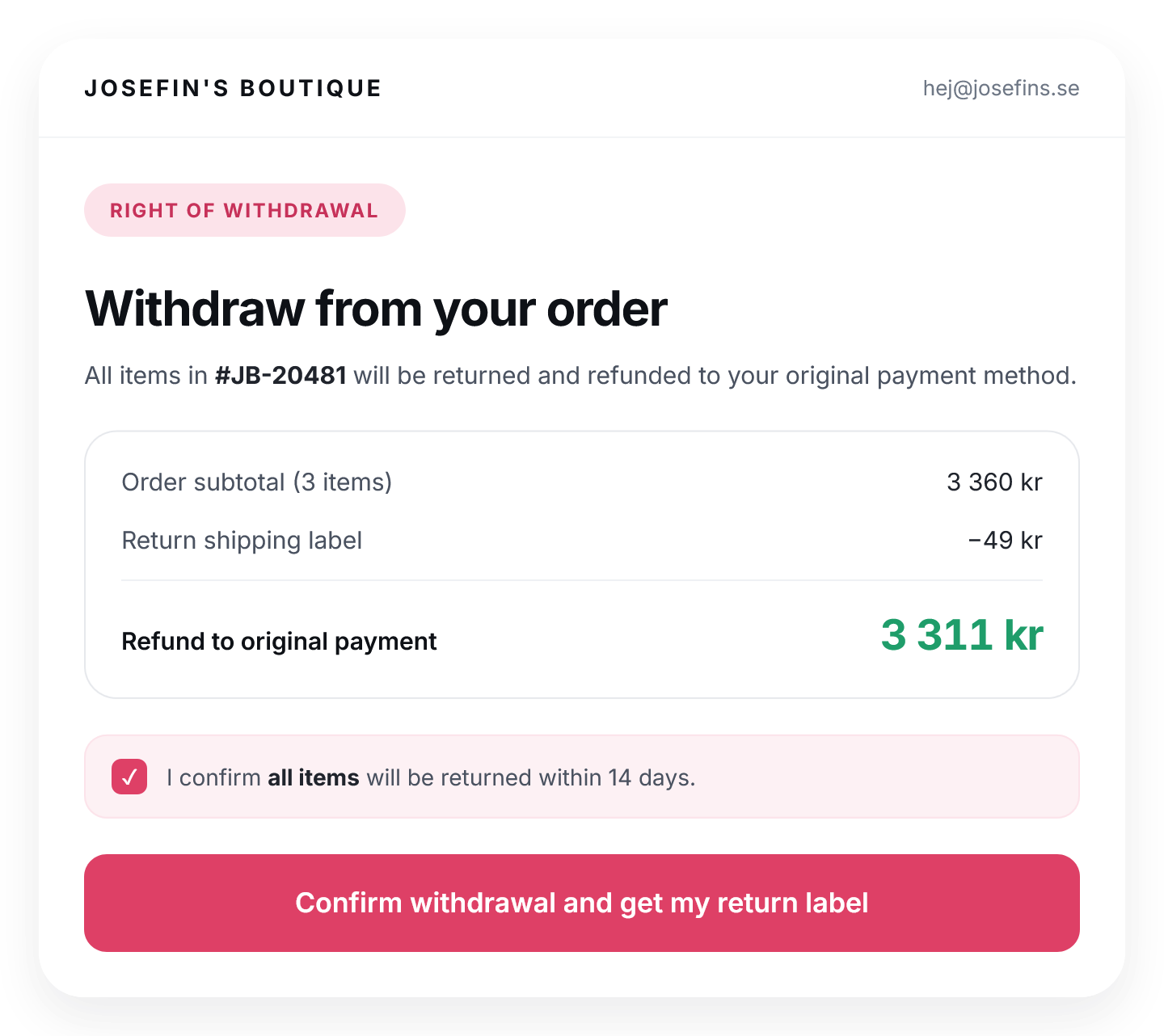
If you sell to customers in the EU, there's a compliance deadline you can't afford to miss. EU Directive 2023/2673, which updates the rules around consumer rights and the right of withdrawal, became effective on June 19, 2026. If your Shopify store hasn't adapted its return policies and checkout flow yet, now's the time.
Here's what it means for you, and how to get compliant without turning it into a six-month project.
What is the Right of Withdrawal, and what's changing?
The right of withdrawal gives EU consumers the ability to cancel an online purchase within 14 days, no reason required. This isn't new, it's been part of EU consumer protection law for years. What Directive 2023/2673 does is tighten and modernize the rules around how that right has to be communicated and honored, closing gaps that had let some merchants get away with vague or hard-to-find return information.
The upshot: it's no longer enough to have a returns policy buried in your footer. You need to be explicit, visible, and timely about:
- When the withdrawal period starts and ends, clearly stated, not just implied
- How customers can exercise their right, the actual mechanism, not just a policy statement
- What happens to their refund, timing, method, and any conditions
- Any exceptions that apply, personalized goods, digital products, etc., and why they're excluded
Where merchants usually fall short
In working with Shopify merchants on this, a few common gaps come up again and again:
- Checkout doesn't mention withdrawal rights at all, or mentions them so briefly customers don't register it.
- Return policy pages exist, but aren't linked from the right places, order confirmation emails, product pages, checkout.
- No clear process for customers to actually initiate a withdrawal, they have to email support and hope for a response.
- Refund timing isn't specified, which creates support tickets and disputes when customers don't hear back in what they consider a "reasonable" time.
None of these are hard to fix individually. The challenge is usually that they're scattered across different parts of the store, checkout, emails, policy pages, and nobody owns pulling them together.
A practical checklist
If you want a fast gut-check on where you stand, ask yourself:
- Is withdrawal-rights language visible at checkout, not just linked in a footer?
- Does your order confirmation email restate the 14-day window and how to act on it?
- Can a customer initiate a return/withdrawal without emailing support first?
- Is your refund timeline explicitly stated (and are you actually hitting it)?
- Are your exceptions (custom goods, digital downloads, hygiene items, etc.) clearly listed and legally defensible?
- Is this consistent across every language your store operates in?
If you answered "no" or "not sure" to more than one of these, it's worth a proper audit before it becomes a customer complaint, or worse, a regulatory one.
Why this matters beyond compliance
There's a business case here too, separate from the legal one. Clear, visible return policies reduce pre-purchase anxiety, customers are more willing to buy when they know exactly what happens if the item doesn't work out. And a self-serve withdrawal process (rather than an email-and-wait system) cuts support ticket volume significantly.
In other words, getting this right isn't just about avoiding fines. It's a conversion and retention lever that a lot of merchants leave on the table.
Where Returbo fits in
Returbo handles the operational side of this for Shopify merchants, return and withdrawal request flows, refund logic, and multilingual customer communication that keeps you compliant across every market you sell into. If you want a second set of eyes on where your store currently stands, reach out and we'll walk through it with you.
Have questions about how Directive 2023/2673 applies to your specific store setup? Get in touch with the Returbo team.